
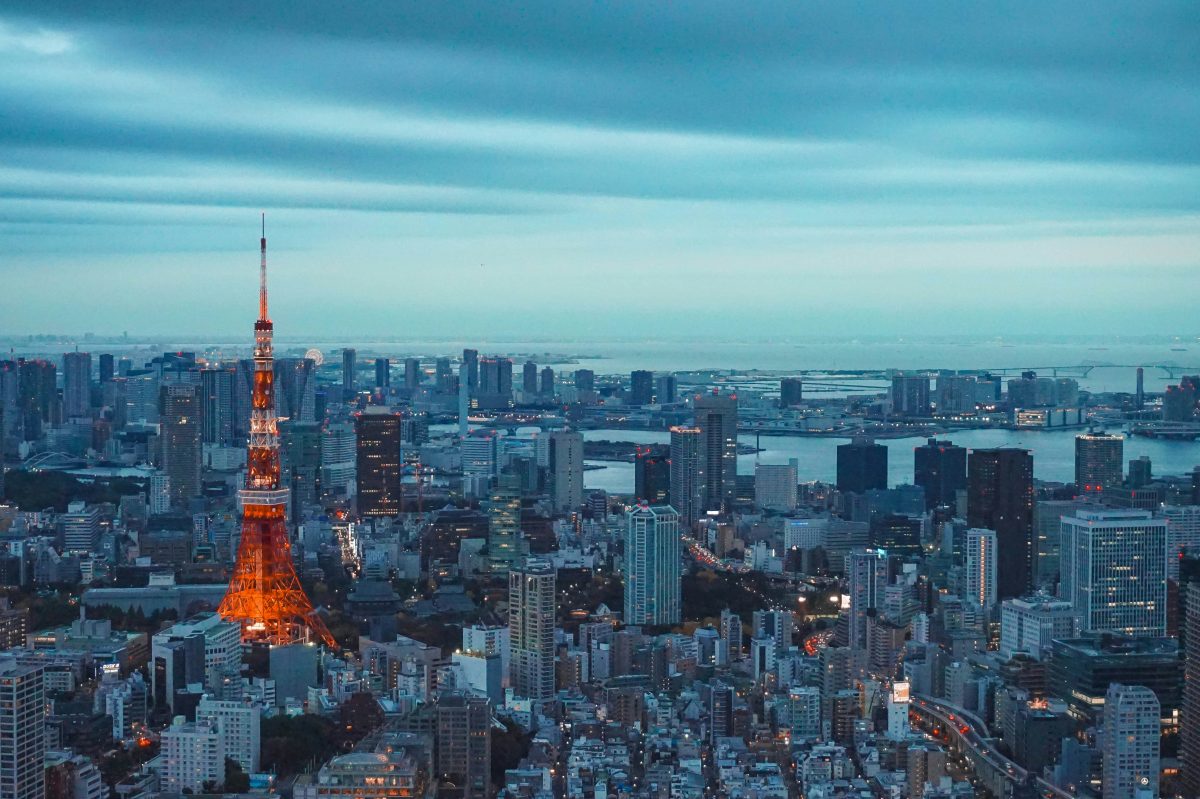
Local’s Picks | 9 Best Luxury Hotels in Tokyo (2026)

This post contains affiliate links. Read the full disclosure here.
If you’re visiting Japan from abroad, Tokyo is a city where it’s worth spending a little more on your hotel.
One reason is the weak yen. Hotel rates in Japan have risen in recent years, but when you convert from dollars or euros, Tokyo’s luxury hotels are still remarkably accessible. Properties that would cost over US$2,000 per night in New York or Paris can start below US$800 in Tokyo.
Tokyo has no shortage of global hotel brands, but what mattered most to me in this guide was whether each hotel offers an experience you simply can’t get anywhere else.
Soak in a real natural hot spring surrounded by Tokyo’s skyscrapers. Wake up to the green of the Imperial Palace from your balcony. Sleep inside Tokyo Station, a building with over a century of history. Stay in the most glamorous space in the city, designed by an Italian jewellery house. Look down on Shinjuku’s towers as the city lights up at night.
That’s the standard I used to narrow it down to 9 hotels.
Which Hotel Should You Choose?
| The Tokyo experience you want | Hotel |
| Explore Tokyo by day, retreat to a traditional hot-spring ryokan at night | HOSHINOYA Tokyo |
| Wake up to Imperial Palace greenery with Japanese-born hospitality | Palace Hotel Tokyo |
| Find stillness and Japanese architectural beauty high above the city | Aman Tokyo |
| Sleep inside a century-old landmark — Tokyo Station itself | The Tokyo Station Hotel |
| Experience Italian glamour fused with Japanese craftsmanship | Bulgari Hotel Tokyo |
| Stroll a 400-year-old Japanese garden and savour Japanese cuisine without leaving the hotel | EXECUTIVE HOUSE ZEN |
| Live the Shinjuku night-skyline scene from Lost in Translation | Park Hyatt Tokyo |
| Use Roppongi as your base for art, food, and nightlife | The Ritz-Carlton, Tokyo |
| Immerse yourself in Shibuya-Harajuku culture with Yoyogi Park greenery | TRUNK(HOTEL) YOYOGI PARK |
These are all “luxury hotels in Tokyo,” but the actual experience varies widely. I wouldn’t choose by brand name alone — I’d start with what you want to do in Tokyo and work backwards from there.
※ All rates are approximate and vary by season and availability.
The Best Luxury Hotels in Tokyo
1. HOSHINOYA Tokyo
- Style: Urban hot-spring ryokan
- Recognition: World’s 50 Best Hotels 2023 #39, Condé Nast Traveler Triple Crown (2026)
- Price: Approx. US$700–1,200 per night
- Best for: Experiencing authentic ryokan culture without giving up a Tokyo city trip
Why stay here
✅ Experience genuine ryokan culture — tatami, kimono, kaiseki — while staying in central Tokyo
✅ Natural hot-spring bath on the top floor, sourced from 1,500 metres underground
✅ Walking distance to the Imperial Palace, Otemachi, and Tokyo Station
If you want a real natural hot spring at a luxury hotel in the middle of Tokyo, HOSHINOYA Tokyo is the place.
Japan is famous for its hot springs, but finding one in central Tokyo is extremely rare. The open-air bath on the top floor is surrounded by the city’s skyscrapers — you soak in the water and look up not at mountains but at Tokyo’s sky. It’s an extraordinary onsen experience.
This isn’t a luxury hotel with Japanese-style decoration. It’s structurally a ryokan. You remove your shoes at the entrance, walk on tatami throughout the building, and spend your time in a kimono. Activities include swordsmanship and tea ceremony, there’s an Edomae sushi counter, and the dinner course is built around traditional Japanese home cooking that’s disappearing from modern households.
The location works well too. Walk to the Imperial Palace in the morning, shop in Ginza in the afternoon, and return to the hot spring by evening. The next morning, Tokyo Station is a 10-minute walk away — you can head straight to Kyoto by bullet train.
2. Palace Hotel Tokyo
- Style: Japanese-born classic luxury
- Recognition: 3 MICHELIN Keys (highest distinction)
- Price: Approx. US$700–1,200 per night
- Best for: Those who prefer Japanese-born hospitality over international chain hotels
Why stay here
✅ More than half the rooms have balconies facing the Imperial Palace gardens and moat
✅ Understated, precise service that defines Japanese-born hospitality
✅ Sushi Kanesaka, one of Tokyo’s top Edomae sushi restaurants, is inside the hotel
What makes Palace Hotel Tokyo special is less about the rooms themselves and more about its location directly beside the Imperial Palace.
The most lasting impression from my stay was the view from the balcony. Photos capture the beauty of the Imperial Palace view, but stepping outside in person, the sky feels impossibly open for the centre of Tokyo. In front of you are the palace gardens and moat, with the city skyline beyond. That sense of distance is completely different from what you get at Tokyo’s high-rise hotels.
Walk around the Imperial Palace grounds in the morning, head to Marunouchi or Ginza during the day, and return to the hotel when you need a break. Tokyo Station is nearby, making this a very practical base for first-time visitors. When booking, don’t just check whether the room has a balcony — confirm that the room category faces the Imperial Palace side.
👉 Check Palace Hotel Tokyo on Booking.com
3. Aman Tokyo
- Style: Minimal Japanese luxury
- Recognition: 2 MICHELIN Keys, World’s 50 Best Hotels #25
- Price: Approx. US$1,500–2,500 per night
- Best for: Those who value space, silence, and refined minimalism
Why stay here
✅ Among the largest rooms of any luxury hotel in Tokyo
✅ Imperial Palace garden views or city views; Mount Fuji visible on clear days
✅ Musashi by Aman — a sushi counter where the chef grows his own rice, brews his own sake, and makes his own ceramics
The spaces are composed almost entirely of wood, stone, and washi paper, with virtually no unnecessary decoration. The rooms are among the largest at any luxury hotel in Tokyo, and every one has a stone soaking tub and heated floors. Rooms on the west side look out over the Imperial Palace gardens, and on clear days, Mount Fuji.
The spa pool is my favourite hotel pool in Tokyo. The 30-metre pool itself is impressive, but what stays with you is the wall of windows with Tokyo stretching out beyond. It feels less like a place to swim and more like a place to pause time, high above the city.
For dining, I’d recommend Musashi by Aman, the sushi counter. The chef grows his own rice, brews his own sake, and even makes the ceramics you eat from. Service is signless — just give your room number — with that distinctly Aman quality of appearing only when needed. The rooms have generous living areas, so in-room dining with a view of the Imperial Palace is also worth considering.
4. The Tokyo Station Hotel
- Style: Heritage luxury
- Recognition: 1 MICHELIN Key, National Important Cultural Property (opened 1915)
- Price: Approx. US$400–800 per night
- Best for: Architecture lovers, and anyone heading to Kyoto or Osaka by bullet train the next day
Why stay here
✅ The only hotel inside the red-brick Marunouchi station building of Tokyo Station
✅ Dome-side rooms look down into the station’s ornamental dome ceilings
✅ Walk out of the hotel and straight onto the bullet train — Kyoto in about 2.5 hours
Opened in 1915 and designated a National Important Cultural Property, this is the only hotel where you can sleep inside the red-brick Tokyo Station building. No matter how much you spend, a new hotel can’t buy a century of history.
I’d recommend a dome-side room. From the window, you can look down at the ornate dome ceiling and the flow of people below. There’s also a guest-only experience where you can view the dome up close. The Imperial Palace and Ginza are nearby, and best of all, you step out of the hotel and you’re already at Tokyo Station — making bullet-train travel to Kyoto or Osaka seamless.
👉 Check The Tokyo Station Hotel on Booking.com
5. Bulgari Hotel Tokyo
- Style: Grand classic luxury
- Recognition: 3 MICHELIN Keys, Forbes 5 Stars, World’s 50 Best Hotels #15
- Price: Approx. US$1,800–3,000 per night
- Best for: Those who want international grand-hotel glamour alongside Tokyo’s food scene
Why stay here
✅ Entry-level rooms start at roughly 52 sqm — exceptionally large for Tokyo
✅ Italian glamour blended naturally with Japanese calligraphy, hinoki cypress, and karesansui dry gardens
✅ Sushi Hōseki — an 8-seat hinoki counter serving omakase sushi
Honestly, my first reaction was: “Why stay at a Bulgari when you’re in Japan?” But seeing it in person changed my mind. Italian opulence is woven with Japanese calligraphy, hinoki wood, textiles, and dry-landscape gardens in a way that feels genuinely organic — this isn’t a global-template Bulgari, it was designed specifically for Tokyo.
The 8-seat Sushi Hōseki, Il Ristorante – Niko Romito, and the Bulgari Bar on the top floor make this a hotel you could choose for the dining alone. It’s close to Tokyo Station, and Ginza, Nihonbashi, and Marunouchi are all within walking distance. It works particularly well at the start or end of a Tokyo trip, combining city sightseeing with memorable meals at the hotel.
👉 Check Bulgari Hotel Tokyo on Booking.com
6. EXECUTIVE HOUSE ZEN
- Style: Hotel-within-a-hotel overlooking a Japanese garden
- Recognition: Forbes Travel Guide 5 Stars
- Price: Approx. US$700–1,200 per night
- Best for: Those who want a Japanese garden, Japanese cuisine, and quiet service all within the hotel
Why stay here
✅ A Japanese garden of over 400 years and roughly 10 acres on the hotel grounds
✅ A hotel-within-a-hotel with just 84 rooms
✅ Exclusive guest lounge with six daily food and drink presentations
EXECUTIVE HOUSE ZEN is a rare hotel with a 400-year-old Japanese garden right on its grounds. Ponds, waterfalls, vermilion bridges, and stone lanterns fill the garden. Walk through it in the morning or evening, then return to the hotel for a Japanese breakfast or tea. It’s a way to experience Japan’s garden and food culture as part of your stay, right in the centre of Tokyo.
The guest-exclusive ZEN LOUNGE offers six food presentations a day, from breakfast through to a nightcap. Think Japanese tamagoyaki omelette, rice porridge, and inari sushi, alongside signature dishes and sweets from the hotel’s kitchens. The views from the lounge stretch over the greenery of Akasaka Palace grounds, the Shinjuku skyline, and on clear days, Mount Fuji.
If you want an even more Japanese touch in your room, choose the Executive HINOKI Deluxe or Executive HINOKI Suite, which come with a hinoki cypress bath. Not all rooms have one, so check the room name carefully when booking.
👉 Check EXECUTIVE HOUSE ZEN on Booking.com
7. Park Hyatt Tokyo
- Style: Landmark luxury
- Recognition: The setting of Lost in Translation. Reopened in 2025 after a full renovation
- Price: Approx. US$700–1,500 per night
- Best for: Those who want a hotel with a story, and the Shinjuku skyline experience
Why stay here
✅ Occupying floors 39–52 in Shinjuku, with a staggering night skyline
✅ World-famous as the setting of Lost in Translation
✅ Fully renovated and reopened in December 2025, including the 52nd-floor New York Grill & Bar
This is not a hotel for experiencing traditional Japanese culture. What you experience here is “TOKYO” itself — the megacity the world has seen in films and photographs. From high above Shinjuku’s towers, the city unfolds into a sea of lights after dark. One look from the 52nd floor and you immediately understand why Lost in Translation made this hotel famous around the world.
The December 2025 reopening brought fully refreshed rooms and facilities, but the atmosphere built over 30 years remains. The 52nd-floor New York Grill & Bar is back, and they now serve a sake-based cocktail called “L.I.T.” as a nod to the film. This is a hotel for people drawn to Tokyo as a vast, electric metropolis.
👉 Check Park Hyatt Tokyo on Booking.com
8. The Ritz-Carlton, Tokyo
- Style: High-rise views + Roppongi culture
- Recognition: 1 MICHELIN Key, Forbes 5 Stars
- Price: Approx. US$700–1,200 per night
- Best for: Those who prioritise skyline views and want art and nightlife on their doorstep
Why stay here
✅ Occupies the top floors of Tokyo Midtown; Mount Fuji visible on clear days
✅ Mori Art Museum and the National Art Center, Tokyo are within walking distance
✅ Hinokizaka offers kaiseki, sushi, tempura, and teppanyaki under one roof
The appeal of The Ritz-Carlton, Tokyo goes beyond its high-floor views — it really clicks when you consider the Roppongi neighbourhood as part of the package. Mori Art Museum and the National Art Center, Tokyo are nearby, putting you at the heart of the city’s art scene. Museums by day, shopping in the afternoon, dinner in Roppongi, then back to the hotel. The flow is effortless.
For dining, I’d point you to Hinokizaka. Within a single Japanese restaurant, you’ll find four counters — kaiseki (multi-course dinner), sushi, tempura, and teppanyaki — letting you sample a wide range of Japanese cuisine in one place. Especially useful if it’s your first trip to Japan and you want to try a bit of everything.
👉 Check The Ritz-Carlton, Tokyo on Booking.com
9. TRUNK(HOTEL) YOYOGI PARK
- Style: Tokyo-born lifestyle boutique hotel
- Recognition: 1 MICHELIN Key, Condé Nast Traveler Hot List 2024
- Price: Approx. US$600–1,200 per night
- Best for: Those who want Shibuya-Harajuku culture and Yoyogi Park greenery
Why stay here
✅ Just 25 rooms, right in front of Yoyogi Park
✅ Easy access to Shibuya, Harajuku, and Meiji Shrine
✅ Guest-only rooftop pool
If you want to tap into Tokyo’s youth culture and contemporary lifestyle, TRUNK(HOTEL) YOYOGI PARK is where I’d send you. Shibuya and Harajuku are right there — fashion, music, independent shops, and cafés that capture what Tokyo feels like right now. Meiji Shrine is also nearby, so you can experience today’s Tokyo and traditional Tokyo on the same afternoon.
The standout feature is the guest-only rooftop pool and lounge. A rooftop pool in central Tokyo is genuinely rare. The view over the park’s treetops and the city beyond is a big reason to choose TRUNK. It works for first-time visitors, but it’s also a strong pick for repeat travellers who want to see a side of Tokyo beyond the famous landmarks.
👉 Check TRUNK(HOTEL) YOYOGI PARK on Booking.com
What to Know Before Booking a Luxury Hotel in Tokyo
The view depends on the room category, not just the hotel
At Tokyo’s luxury hotels, the experience can vary significantly from room to room within the same property.
At Palace Hotel, you want the Imperial Palace side. At The Tokyo Station Hotel, the dome side. At high-rise hotels, a room facing Mount Fuji or the city skyline. If you’re spending this much on a hotel, don’t just book the cheapest room — check what you’ll actually see from the window. If the difference is a few hundred dollars, I’d always choose the room with the better view.
Book early for cherry blossom season
The hardest time to find availability in Tokyo is cherry blossom season. From late March to early April, international visitors surge, and rooms with distinctive features — Imperial Palace views, balconies — fill up first.
Rates also tend to rise during New Year and Japan’s major holiday weeks, so if your dates are set, book as early as you can.
Reserve the hotel’s sushi and Japanese restaurants before you arrive
In Tokyo, “it’s a hotel restaurant, so I can walk in” doesn’t always hold.
The sushi counter at Aman, Edomae sushi at Palace Hotel, Bulgari’s 8-seat sushi counter — these are restaurants you’ll want to reserve separately from your room. If your hotel has a standout restaurant, book the meal at the same time you book the room. Splitting your evenings between dining out in the city and dining at the hotel makes a Tokyo trip much smoother.
Onsen and “Japanese bath” are not the same thing
Several luxury hotels in Tokyo feature Japanese-style bathing facilities or large soaking tubs, but not all of them are true onsen — natural hot-spring water.
Hotels like HOSHINOYA Tokyo, which uses natural hot-spring water pumped from deep underground, are extremely rare in central Tokyo. If soaking in a real onsen is on your list, confirm whether the hotel offers a genuine onsen or simply a Japanese-style bath.
You don’t have to take the train from the airport
Tokyo’s public transport is excellent, but if you’re heading to a luxury hotel with large suitcases, taking a taxi or private car from the airport is perfectly reasonable.
Especially with a family or after a long-haul flight, I wouldn’t force the train connections. On the other hand, the bullet train is by far the best way to travel from Tokyo to Kyoto or Osaka. That’s why hotels near Tokyo Station — HOSHINOYA Tokyo, Palace Hotel, Aman, The Tokyo Station Hotel, and Bulgari — pair particularly well with a multi-city Japan itinerary.
Tipping is not expected in Japan
Even at luxury hotels, there’s no need to tip the way you would in the United States. The same goes for restaurants and taxis. It may feel unusual at first, but simply pay the amount shown — service is already included, and it’s consistently excellent.
So, Which Tokyo Hotel Should You Book?
All 9 are excellent hotels, but the question I always come back to is: does this hotel offer something I can’t get anywhere else?
If it’s your first time in Tokyo, I’d start with Palace Hotel Tokyo or HOSHINOYA Tokyo. The former is the clearest expression of Japanese luxury hospitality; the latter is the most immersive way to experience ryokan culture in the city.
For repeat visitors, Aman Tokyo or Bulgari Hotel Tokyo. They’ll show you how deep Tokyo’s luxury hotel scene really goes.
For history, The Tokyo Station Hotel or EXECUTIVE HOUSE ZEN. For the sheer energy of Tokyo as a megacity, Park Hyatt Tokyo or The Ritz-Carlton, Tokyo.
A luxury hotel in Tokyo is too good to treat as just a place to sleep. Think of the hotel itself as one of the experiences of your Tokyo trip. Once you see it that way, the right one for you becomes much easier to find.